

ghdlm.over-blog.com/
15 Février 2021

Summary: Files are not showing in external hard drive? Can't see files in external hard drive? If you are also having such type of questions, then check the solutions in this post and get missing files back.
Mount the External Hard Drive on Mac. It could be the case that your Mac already detects an external hard drive, but it just not showing its icon on your desktop screen. If it is the case, then you can easily mount and access your drive again and all you have to do is to follow the below steps. Make Sure It's Plugged In and Powered On. I know, I know, but hear me out: just because you. Change the Finder settings. One of the most common reasons for Mac not recognizing external.
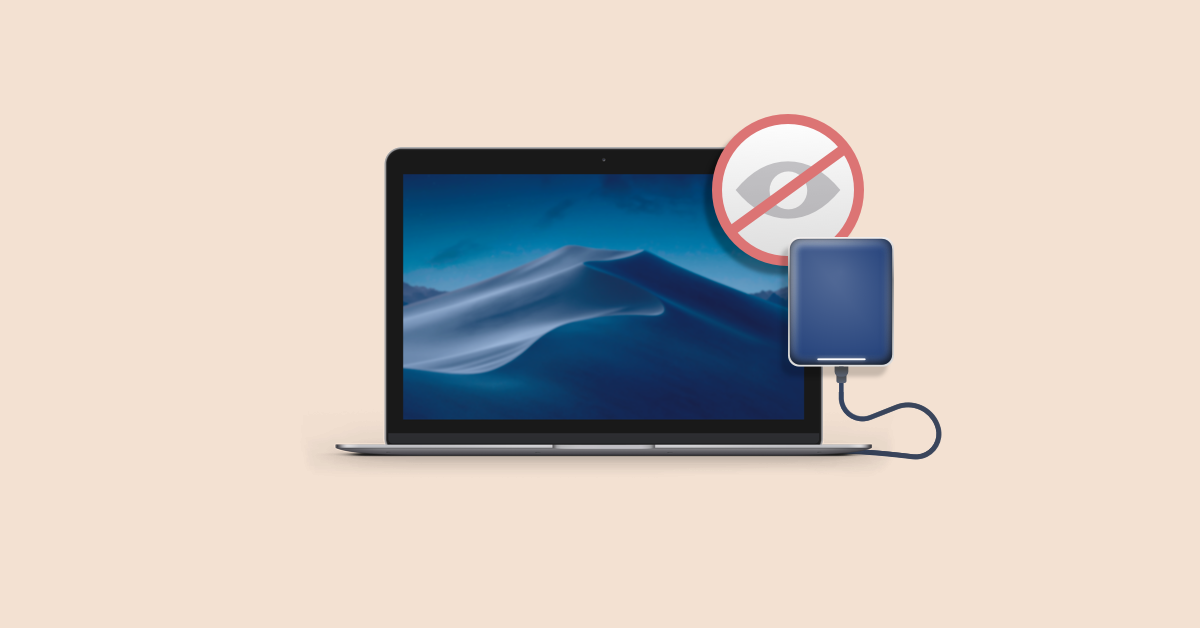
External hard drives are portable storage devices that can be attached to a computer through a USB cable or wireless connection. It typically comes in various storage capacities, letting you transfer massive files between computers, expand the capacity of your computer and back up essential data easily.
While enjoying the advantages of portable hard drives, you may encounter troubles they make. Sometimes, when you open an external hard drive, you find some important files disappeared, or even worse, the external hard drive is empty. In this comprehensive guide, you will learn about why you can't see files in an external hard drive and how to access the disappeared files in external hard drive on Mac.
If you can't see files on your external hard drive, including Seagate external hard drives and WD external hard drives, don't be panic. You are not the only one. Quite a lot of Mac users have complaint in forums that they encountered this issue:
I am trying to use my external hard drive I have had for a couple years to back up some files on my computer, but the data I had stored on there already have disappeared. I know the data I already had on there is still on the hard drive because nearly half of the space on the drive is used up. Is there any way I can find and access the old files again?
Why do files suddenly disappear in external hard drive? How to fix this issue and recover disappeared files in the external hard drive? Please move forward.
There are the most common reasons why the files are disappeared in external hard drive on Mac:
Accidental deletion
Sometimes, the files are accidentally deleted but you don't even notice that.
The files or folders are hidden by the system
In some cases, files are hidden by the operating system, so you can't see them on the external hard drive. It could be that you accidentally hide files, and the system also hides sensitive files by default to keep things simple.
File system error
Files are not showing in an external hard drive because the disk's file system is corrupted. As a result, the computer system fails to access the entries to your files or show these files.
Virus attack
Your external hard drive might be infected by a virus or attacked by malware that hides, deletes or encrypts the files on the drive.
In addition to the four common causes, there are other reasons that may lead to files not showing in external hard drives issue. Don't worry. All such issues can be resolved and files can be easily recovered. Let's dive right into how to fix this problem.
Faced with such a situation, most users behave like ants on hot bricks. First of all, take a deep breath and calm down. As you can't identify what the specific reason is, please try the solutions one by one to fix files disappeared from external hard drive on Mac.
Only when your external hard drive is mounted in Disk Utility that you can access files on the drive on Mac. So, if you can't see files on your external hard drive, you should at first check whether the external hard drive is showing up in Disk Utility and mounted.
Hopefully, you can see all files on the external hard drive in Finder and on the desktop now.
The first step is to check if the file is still in the Trash in case you've accidentally deleted it. Click on the Trash icon in the Dock and inspect the Finder window that opens. If you see the file, drag it out of the Trash, or right-click the file and choose Put Back.
If you can't see any file you want in the Trash bin, your files on the external hard drive might be hidden by the operating system. Let's see how to show hidden files on Mac:
Option 1: Use a keyboard shortcut
Option 2: Run command lines
Note that this command causes the Finder to quit and restart. When the Finder reappears, you will see hidden files if any exist.
Don't know how to show hidden files on Mac computers? Just read this page and find the hidden files on Mac computers quickly. Read more >>
After following steps aforementioned to show hidden files, if you are still unable to see files on your external hard drive, this issue may result from file system errors. Fortunately, macOS has a built-in tool, First Aid, that can check and repair file system errors. Here are steps to run it:
If you receive a report that First Aid process has failed, and it's asking you to back up your data as much as possible, that means your external hard drive may be seriously corrupted. In this case, reformatting the disk is your last resort.
Reformatting will refresh the file system which is a quite efficient way to fix any file system error. This process is very simple and shouldn't take more than a minute to complete.
• Tutorial to reformat external hard drive on Mac
Note: Keep in mind that the reformatting process will erase all data stored on the drive. So please make sure you have backed up your important files. Don't have any file copy at other places? You should move to the next part to recover lost data from the external hard drive before reformatting.
When the erase process completes, you will get an empty external hard drive. Then move your backup files back to the drive and you will find everything works great.
Want to reformat your external hard drive but haven't backed up your important data yet? Or none of the solutions above worked for you? This is where a data recovery tool comes into handy.
As free and professional Mac data recovery software, iBoysoft Data Recovery for Mac is highly recommended. It can thoroughly scan your external hard drive and quickly recover files disappeared from an external hard drive, no matter what the reason you lose data, such as accidental deletion, virus attack, or files hidden by system.
This reliable tool can support 1000+ file types, including pictures, documents, videos, audio files, and more. In addition to external hard drive data recovery, iBoysoft Data Recovery for Mac is also designed to recover lost data from internal hard drives, USB flash drives, SD cards, memory cards, and other storage devices on macOS Big Sur 11/10.15 and earlier.
Through only 4 steps, you can recover lost or missing files from external hard drives on Mac.
After finishing the scanning process, you can filter the results as needed by filename keyword, file type, file size, and date. iBoysoft Data Recovery is built with a strong preview feature that enables you to preview images, documents, music files, videos, etc. With this handy feature, you can ensure the file is exactly you are looking for and its content is recoverable.
Besides, iBoysoft Data Recovery for Mac can recover deleted files even emptied from the Mac Trash, recover lost data from formatted, unreadable, unmountable, inaccessible drives. Even when your Mac won't boot, it can help you regain access to your computer data. Connecting a mac to alexa.
It's bothering if you can't see files in external hard drive due to various reasons. In this article, we mainly focus on the most possible reasons that caused this problem, such as accidental deletion and file system errors. More importantly, we hope you can find useful solutions to fix files not showing in external hard drive issue.
Fail to fix this issue with the solutions above? iBoysoft Data Recovery for Mac might be a lifesaver to get missing/hidden files back. It can recover lost data from any storage volume attached to your Mac, regardless of what file system the disk has.
But even so, it's still important to do regular backups to prevent the loss of data. Start to back up today!
Mac OS X do not support writing files into NTFS filesystems by default and you cannot copy files to external hard drive from mac. But Mac do support reading the NTFS drives and copying files from NTFS HDDs. Most of the Mac users don't know this and will buy portable external hard disks to expand the storage space. If you bought one, don't worry 3 solutions are for you.
Solution 1. Format the Hard disk with ExFat file system (Windows and Mac will fully support it)
Solution 2. A Third party utility to support read and write operations on NTFS file system.
Solution 3. Using simple tweaks play on your Mac OS X.
If you go for the first solution, simply backup all the data and connect your external hard disk to your MAC and follow the steps
Second solution is a third party utility that adds NTFS drivers for Mac. Go for 'Paragon NTFS for Mac' which is a paid software. Download and install it.
If you are using Seagate external hard disk, the download free copy of 'Paragon NTFS' thats comes absolutely free and only works with Seagate branded portable hard disks. Download Paragon NTFS for Seagate made Portable Hard disks.
Its a bit skill oriented task, so follow it carefully and at your own risk.
First connect your NTFS Drive into the Mac and open 'Terminal' application and run the below command to find the UUID of your External NTFS Hard Disk. (My NTFS HDD name is 'TOSHIBA', Edit with your own Mac HDD name)
diskutil info /Volumes/TOSHIBA | grep UUID
Sample output:
Volume UUID: 45125EB1-E1C3-3D21-9484-32DE22FEF0
Now enable read/write support for the Hard drive (based on UUID) run the below command, edit with your own Disk Volume UUID. This command add read write attribute to the /etc/fstab
sudo echo 'UUID=
example:
sudo echo 'UUID=45125EB1-E1C3-3D21-9484-32DE22FEF0 none ntfs rw,auto,nobrowse' >> /etc/fstab
Now you will be able to perform both read and write to that NTFS formatted Hard drive from that Mac. If you got another NTFS hard drive, Follow the steps again to find that HDD's UUID and enale the rw/wr .


/image%2F6221837%2F20210221%2Fob_a4805c_check-os-version-on-mac.jpeg)
/image%2F6221837%2F20210221%2Fob_3f052a_how-to-install-printer-on-mac-pro.png)
/image%2F6221837%2F20210221%2Fob_754825_adobe-premiere-pro-cs6-for-mac-price.jpeg)
/image%2F6221837%2F20210221%2Fob_a8c61f_call-of-duty-modern-warfare-mac-downlo.jpeg)